

Direct Anterior Hip Replacement
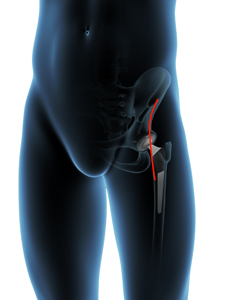
What is Direct Anterior Approach Hip Replacement Surgery?
Direct anterior hip replacement, also called direct anterior total hip arthroplasty, is a minimally invasive hip surgery to replace the hip joint without cutting through any muscles or tendons as against traditional hip replacement that involves cutting major muscles to access the hip joint.
What is the Procedure for Anterior Hip Replacement?
Anterior hip replacement surgery is performed under general anesthesia or regional anesthesia. You will lie down on your back, on a special operating table that enables your surgeon to perform the surgery from the front of the hip. Your surgeon may use fluoroscopic imaging during the surgery to ensure the accuracy of component positioning and to minimize leg length inequality.
Your surgeon will make an incision, about 3-4 inches long on the front of the hip. The muscles are pushed aside to gain access to the joint and perform the replacement. Next, the femur is separated from the acetabular socket. The acetabular surface is prepared using a special instrument called a reamer. The acetabular component is cemented or fixed with screws into the socket. Then a liner made up of plastic, metal, or ceramic is placed inside the acetabular component.
The femoral head that is worn out is cut off and the femur is prepared using special instruments so that the new metal component fits the bone properly. Then, the new femoral component is inserted into the femur either by a press fit or by using special bone cement. The femoral head component made of ceramic or metal is then placed on the femoral stem.
Once the artificial components are fixed in place, the instruments are withdrawn and incisions are closed with sutures and covered with a sterile dressing.
Direct Anterior Hip Replacement in Colorado Springs, CO
Direct anterior hip replacement accesses the hip joint through an incision at the front of the hip, working between muscles to replace damaged joint surfaces. It may be an option for patients whose hip arthritis continues to cause pain and limited mobility despite nonsurgical treatment. In Colorado Springs, CO, Dr. Michael Feign, DO, offers hip replacement evaluation at Colorado Springs Orthopaedic Group. As a board-certified orthopaedic surgeon with fellowship training in adult reconstructive surgery, he can assess your hip condition and discuss an appropriate surgical approach for your needs.
What are the Risks and Complications of Anterior Hip Replacement?
All surgeries carry an element of risk, whether it is related to the anesthesia or the procedure itself. Risks and complications with anterior hip replacement are rare, but can occur and may include:
- Infection at the incision site or joint space
- Fracture
- Nerve damage
- Hemarthrosis - excess bleeding into the joint after the surgery
- Deep vein thrombosis (blood clot)
- Leg length inequality
What Does Postoperative Care for Anterior Hip Replacement Involve?
Post surgery, your doctor will give you specific instructions to be followed at home for a faster recovery. These include:
- Take medications as prescribed to relieve pain and prevent infection.
- Participate in physical therapy to restore hip function and strength.
- Eat a healthy diet and do not smoke to facilitate healing and promote a faster recovery.
- Contact your doctor if you observe increasing swelling or redness in the operated area.
After traditional hip replacement surgery, you would be instructed to follow precautions to prevent your new hip from dislocating. These guidelines are very restrictive and include:
- No bending or flexing of the hip past 90 degrees.
- No crossing of legs.
- Use a pillow between the legs when sleeping.
- Use an elevated toilet seat.
As anterior hip replacement uses a muscle-sparing technique there is increased joint stability after surgery and in most cases, these precautions are not needed.
What are the Advantages of Anterior Hip Replacement?
The advantages of anterior hip replacement include:
- Smaller incisions
- Shorter operative time
- Minimal blood loss
- Short hospital stay
- Less postoperative pain
- Minimal soft-tissue trauma
- Less scarring
- Quicker recovery
- Early mobilization
- Less postoperative restrictions
- Quicker return to normal activities
- Lower risk of dislocation
Why Choose Dr. Feign for Direct Anterior Hip Replacement in Colorado Springs, CO?
Selecting a hip replacement surgeon involves considering specialized training, clinical experience, and the suitability of the procedure for your condition. Dr. Feign’s qualifications include:
-
Board-certified expertise: Certified by the American Osteopathic Board of Orthopaedic Surgery. -
Fellowship training: Completed advanced training in adult reconstructive surgery at the University of Utah. -
Dedicated hip and knee focus: Specializes in arthritis, complex hip and knee injuries, and total joint replacement. -
Established local experience: Has served the Colorado Springs community for more than 20 years. -
Convenient consultation locations: Sees patients at CSOG’s North and South campuses in Colorado Springs.
Direct Anterior Hip Replacement FAQs
Schedule a Direct Anterior Hip Replacement Consultation in Colorado Springs, CO
If hip pain and stiffness are limiting your daily activities, schedule a consultation with Dr. Michael Feign at Colorado Springs Orthopaedic Group. With North and South campus locations in Colorado Springs, CO, you can discuss your treatment options and whether direct anterior hip replacement is suitable for your condition. Contact the practice to request an appointment.
Patient Services and Care Coordination
Our team can assist with appointments and general inquiries.